
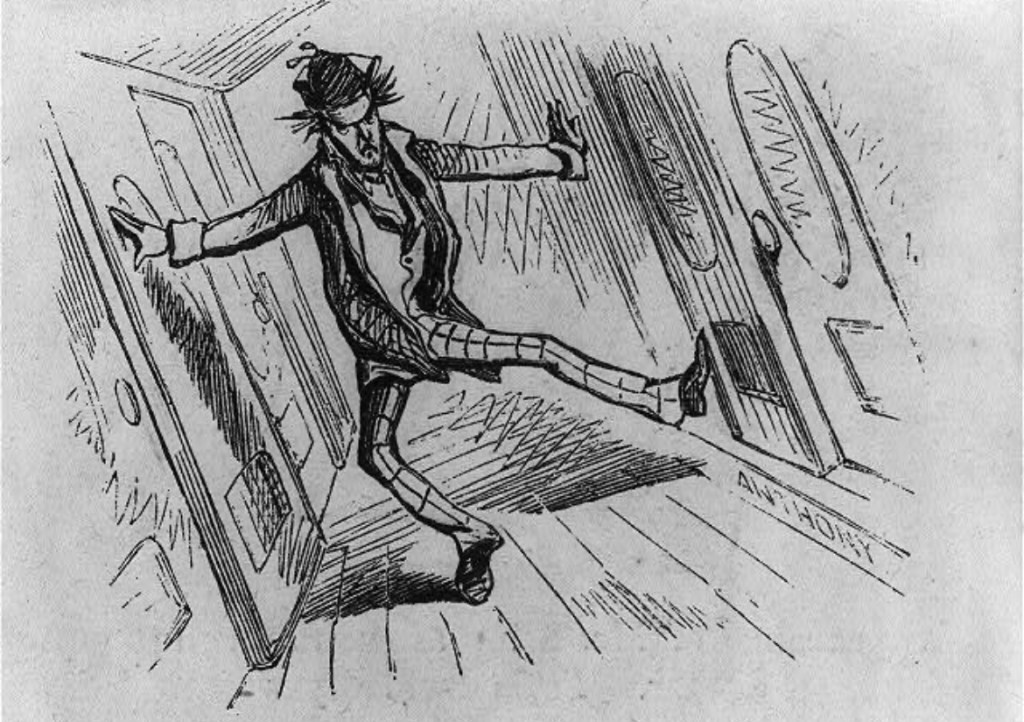
sea legs noun – a person’s ability to keep their balance and not feel seasick when on board a moving ship.
This happens when the inner ear and the brain resolve what seem to be conflicting messages. The inner ear is part of the body system that helps us maintain our balance. Fluid-filled structures inside the ear are sensitive to gravity and report to the brain whether you are standing up, lying down, or moving. On a ship being rocked by waves, the inner ear is constantly sending messages to the brain about this unfamiliar movement. The brain knows that this movement is not caused by the body. Like a system of checks and balances, the brain validates these messages from the inner ear against what your eyes see and your body feels. Because your brain knows the body is standing still, and visually there are limited signs of movement because the body and the boat are moving together, the brain is unable to compensate for the confusing information. In time, our magnificent brain adapts.
The crew on Queen’s Dream gained their “sea legs” quickly. We set sail from France 18 days ago and have logged 2,100 sea miles. The first days are awkward as you stumble around with every roll of the boat. As time passes, the body quickly adapts, learns, and morphs into its new norm. It becomes second nature as your muscles send simple messages, the brain reacts quickly and instructs the body how to counterbalance the motions. The “boat bruises” are less often, the sore body pains from using boat “yoga” muscles fades with the days. We are now “balance ninjas” – it’s impressive to watch as the boat rolls and like a human gimble, you totally stand level as the legs absorb the direction and motion.
QD does offer an advantage over the ships of old – she is a well-balanced catamaran with a wide beam instead of the classic monohull design that awes, rolls and twists with every tiny wave. She was built to cross oceans and take her crew to distant shores. We will leverage our “sea legs” for many more weeks until we let QD rest and are able to use our “land legs” again …


Glad you are adjusting, wonder how long it takes for your body to adjust to the land? You will find out in a few weeks 🙂
LikeLiked by 1 person